Mathematics and physics · 1882–1935
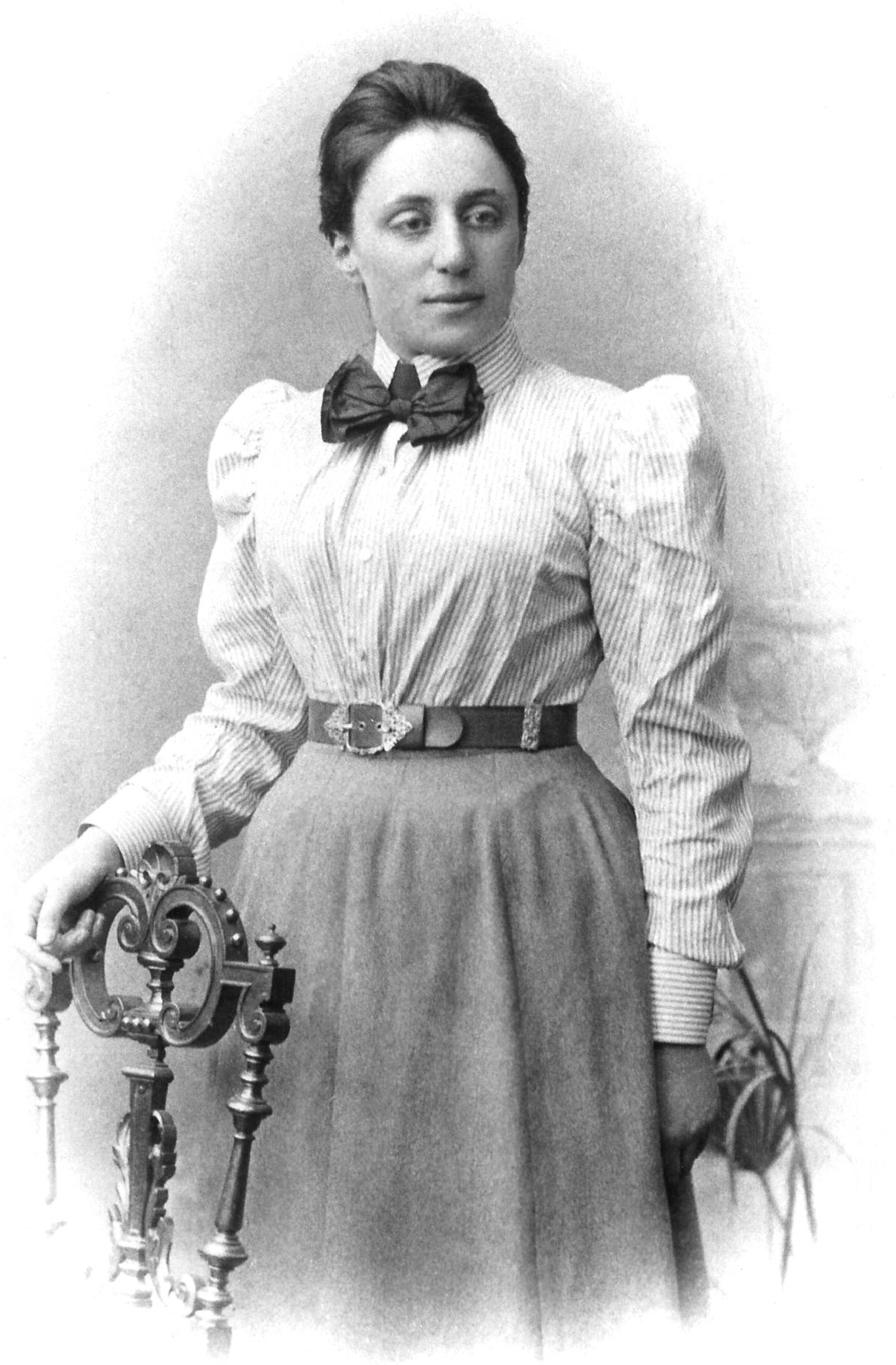
Emmy Noether
Surprising fact
Einstein wrote to a newspaper to say she was the most important woman in the history of mathematics.
Emmy Noether grew up in Erlangen, Germany, the daughter of a mathematician. She was allowed to attend university only as a guest, because women could not enrol. When the rules changed in 1919 and she was finally allowed to hold a teaching post, the faculty argued that a woman professor would be an intolerable intrusion. Einstein and the mathematician David Hilbert wrote in her defence; Hilbert declared that a university senate was not a bathhouse.
What she found was a theorem that sits under the whole of modern physics. Noether’s theorem says that every conservation law in nature, energy, momentum, charge, comes from a symmetry: if the rules of the universe do not change from one hour to the next, energy is conserved. Physicists use it daily, usually without saying her name.
She was also the teacher of a generation. Her students came to her house for dinner and worked in her kitchen while she talked. When the Nazis expelled her in 1933, because she was Jewish, she took a post in the United States and started again.
She died in 1935 after surgery, at fifty-three. Einstein wrote to the New York Times calling her the most significant creative mathematical genius since women’s higher education began. Her theorem is still the first thing a physics student meets when they ask why anything is conserved at all.
Sources: Encyclopædia Britannica; Albert Einstein Institute.
The quiz
When a university argued against giving Emmy Noether a teaching post, who wrote in her defence?
See you tomorrow. Three new faces join every morning.
No signup, no payment. The faces are free to read. The morning email comes with the full product.