Physics and chemistry · 1867–1934
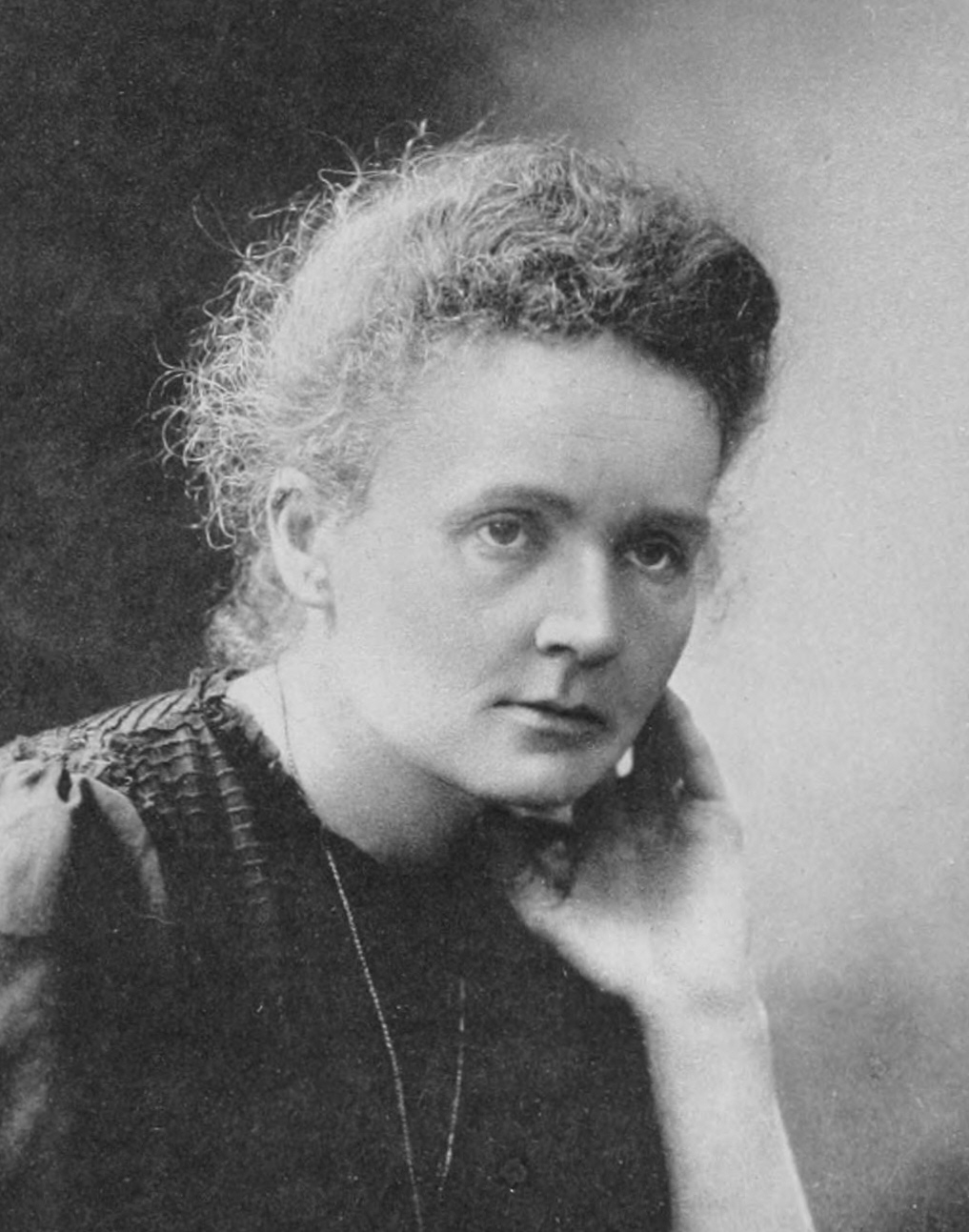
Marie Curie
Surprising fact
Her notebooks are still radioactive. A library in Paris keeps them in lead-lined boxes.
Maria Skłodowska left Warsaw for Paris with little money and a trunk of books. In a leaky shed she and her husband Pierre stirred tons of ore by hand, hunting two new elements: polonium and radium.
In 1903 she shared the Nobel Prize in Physics. In 1911 she won it again, alone, in chemistry. No one had ever won two. She was also the first woman to teach at the Sorbonne, and she ran the labs that trained a generation of scientists.
During the First World War she put her prize money into the war effort and drove X-ray vans to the front herself, so surgeons could find bullets and bone before they operated. Her daughter Irène, still a teenager, worked beside her.
She died in 1934, after years of working so close to radiation that her papers still glow in a detector today. She was handling the century before anyone knew what it would cost.
Sources: Nobel Foundation; Encyclopædia Britannica.
The quiz
Marie Curie’s notebooks are kept in lead-lined boxes in Paris, more than a century after she wrote them. Why?
See you tomorrow. Three new faces join every morning.
No signup, no payment. The faces are free to read. The morning email comes with the full product.