Suffrage and reform · 1820–1906
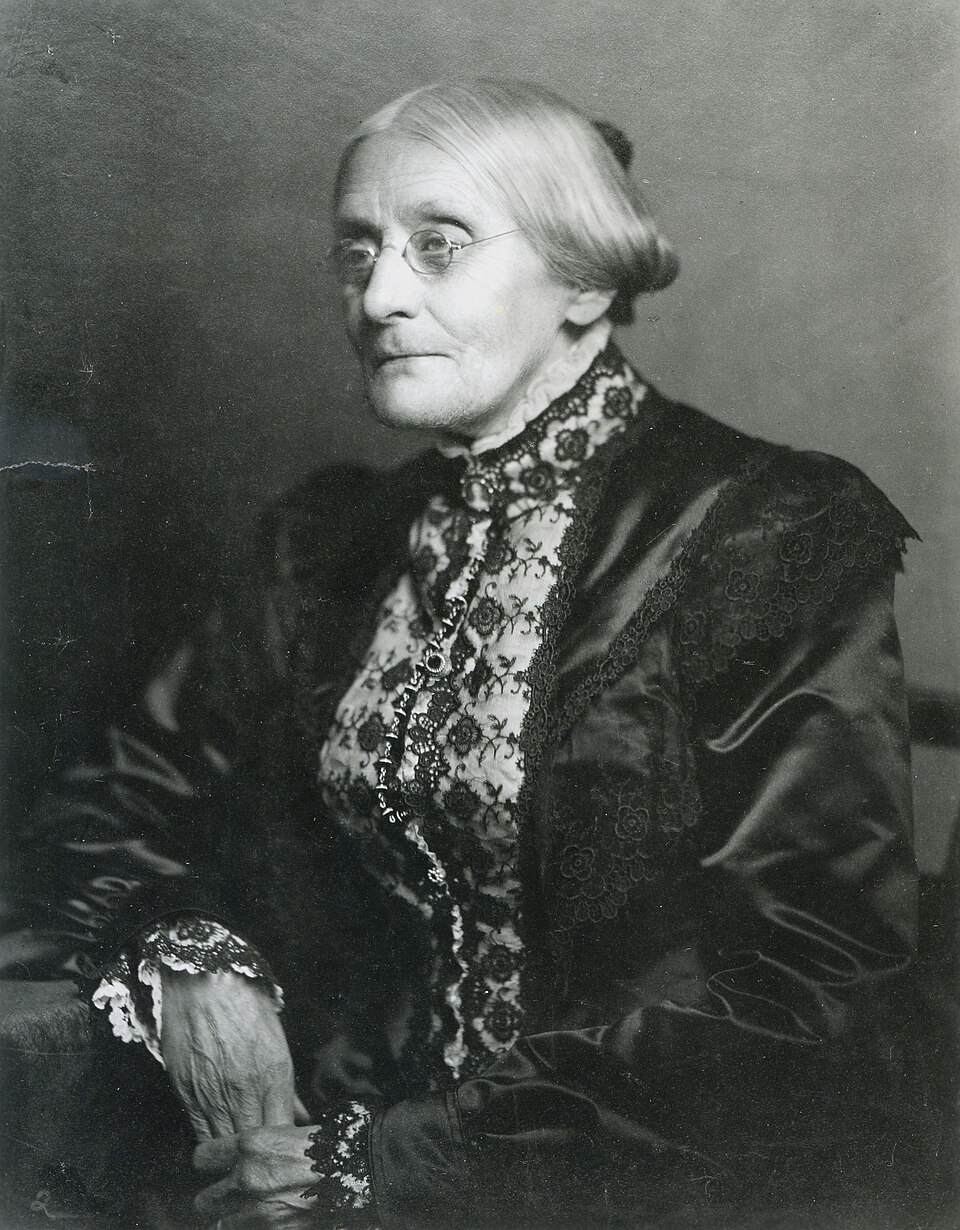
Susan B. Anthony
El dato sorprendente
In 1872 she was arrested at her own home for voting in the presidential election, tried by a judge who had written his verdict before the trial began, fined a hundred dollars, and never paid it.
Susan Brownell Anthony was born in 1820 in Adams, Massachusetts, into a Quaker family that took the idea of equality seriously: her father taught her to read, refused to drink, and had his children educated alongside the children of the mill workers he employed. The family moved to a farm near Rochester, New York, that became a gathering place for abolitionists, including Frederick Douglass, whose newspaper was printed a short ride away. Susan began teaching school as a teenager and found within a few years that she was earning a fraction of what the men around her were paid, and saying so out loud, at a teachers’ convention, to an audience that had not asked.
Reform came to her in layers. Temperance drew her in, and she learned her first hard political lesson at a temperance meeting where she was refused the floor because she was a woman: she left and began organizing women separately. In 1851 she met Elizabeth Cady Stanton, and the partnership that would run the rest of her life began. Together they collected thousands of signatures for petitions to the New York legislature, and helped win married women the right to keep their own property and wages. The house in Rochester was a station on the Underground Railroad, and Anthony spent the 1850s speaking against slavery to halls that sometimes threw things.
During the Civil War she and Stanton organized the Women’s National Loyal League and gathered hundreds of thousands of signatures on a petition to abolish slavery outright, the largest petition of its kind up to that time. Then came the split that shaped everything after: the Fifteenth Amendment proposed to protect the vote regardless of race, but not of sex. Anthony and Stanton opposed it, arguing for universal suffrage at once, and broke with allies who believed the moment belonged to Black men. In 1869 they founded their own organization, the National Woman Suffrage Association, and in 1868 Anthony had been publishing a weekly paper called The Revolution with the slogan men, their rights and nothing more; women, their rights and nothing less.
On the first of November 1872 she walked into a barber shop in Rochester and voted in the presidential election, arguing that the Fourteenth Amendment already made her a citizen with the rights of one. A deputy marshal came to her house and arrested her. The trial in Canandaigua the following June was presided over by Judge Ward Hunt, who had written his opinion before hearing a word of evidence, directed the jury to find her guilty without letting them deliberate, and fined her a hundred dollars. She said she would never pay a dollar of it, and she never did, which closed off the appeal she had wanted all along.
She spent the following thirty years doing exactly what she had been doing: travelling, speaking, writing, hauling the argument into town after town, and in 1890 she brokered the merger of the rival suffrage groups into one national association and led it. She died in Rochester in March 1906, at eighty-six, fourteen years before the Nineteenth Amendment finally passed, the one the newspapers had been calling the Anthony Amendment for decades. Her last public speech ended on a line she had been building to all her life: failure is impossible. In 1979 her portrait went onto the dollar coin, the first woman on American circulating currency.
Fuentes: Encyclopædia Britannica; National Park Service.
El cuestionario
Susan B. Anthony voted in the 1872 presidential election and was arrested for it. What happened at the end of her trial?
Hasta mañana. Tres caras nuevas llegan cada mañana.
Sin registro, sin pago. Las caras son gratis para leer. El correo de la mañana llega con el producto completo.