Invention · c. 1400–1468
Johannes Gutenberg
Surprising fact
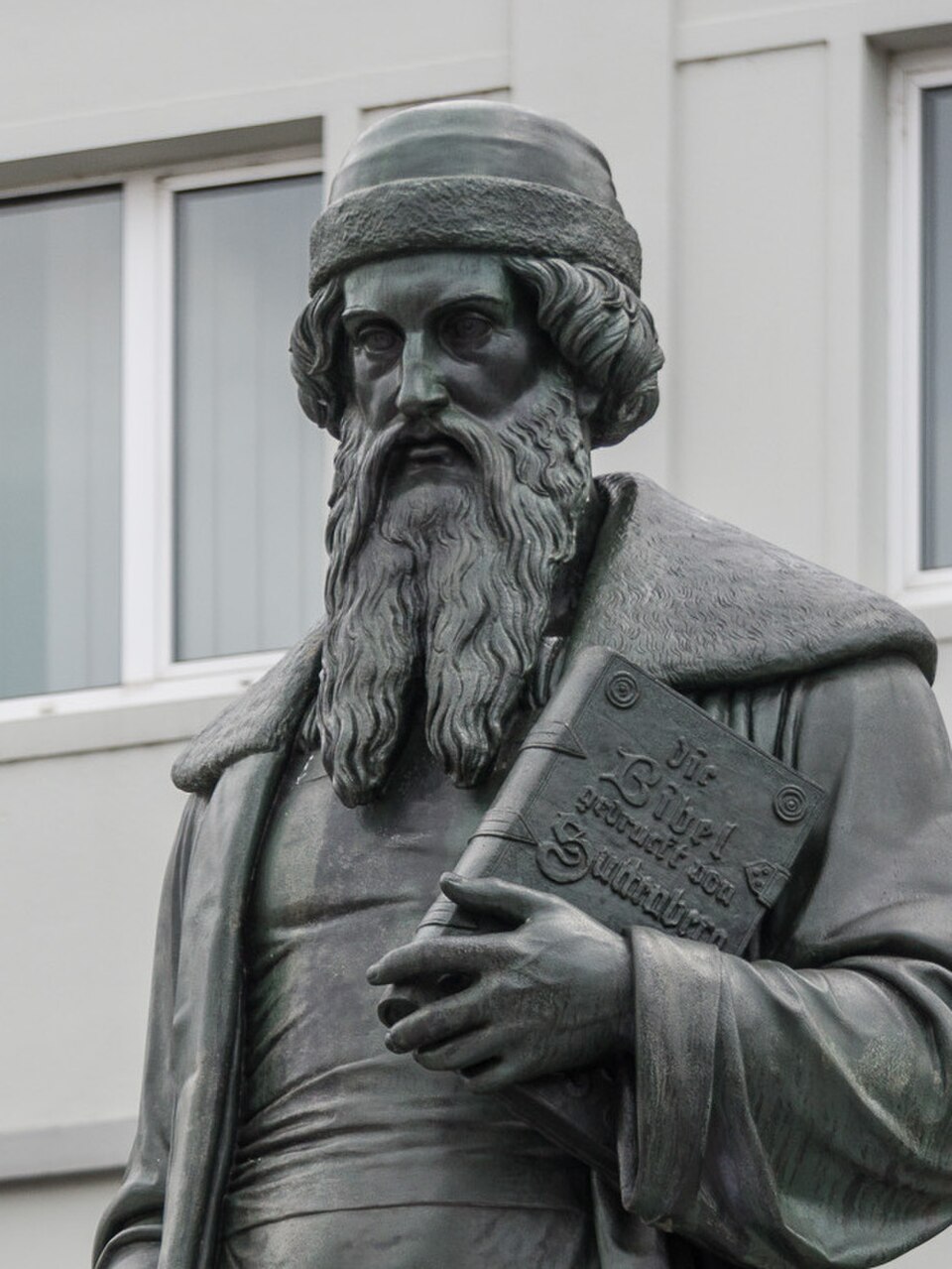
Not a single portrait of him was made in his lifetime. Every picture of the inventor of the printing press is a later invention, and the great Bible he printed names nobody at all.
Johannes Gensfleisch zur Laden zum Gutenberg was born around 1400 in Mainz, into a family of the patrician class with ties to the city’s mint, which is where the idea of casting metal probably entered his life. He learned goldsmithing and the working of metal by hand. When the patricians lost a political struggle in Mainz and were driven out, the family moved to Strasbourg, and there, in the 1430s and 1440s, Gutenberg began working on something he kept quiet: partnerships were signed and dissolved around a project he would not name, and lawsuits from those years refer to presses, forms and a secret art.
He returned to Mainz around 1448 and borrowed a large sum from a wealthy moneylender named Johann Fust, enough to equip a proper workshop. What he built was not one invention but a system: a punch-cutting and type-casting method that could produce identical metal letters in quantity, an oil-based ink that stuck to metal, and a press adapted from the screw presses that squeezed grapes and pressed cloth. He printed grammars and calendars, then began the great project, a complete Latin Bible, set in two columns of forty-two lines and worked through page by page. Around 180 copies came off the press by about 1455, some on paper, some on vellum.
In 1455, just as the Bible was finished, Fust called in his loan. Gutenberg could not pay, and the suit that followed took everything: the workshop, the tools and the finished Bibles went to Fust, who ran the press with Gutenberg’s own assistant Peter Schöffer and became the first famous printer in Europe. Gutenberg kept only a smaller shop and went on working with borrowed capital. In 1465 the archbishop of Mainz took him into his court with the right to food, clothing and other allowances, a pension in all but name, which was some compensation and not much of one.
What followed was the part Gutenberg could not have imagined. Within forty years presses were running in more than two hundred and fifty European cities and something like twenty million books had been printed, more than all the scribes of the previous thousand years had produced. In 1517 a German monk named Luther nailed up his objections, and within weeks printed copies were carrying them across Europe faster than any church could answer them. Literacy, science, the Reformation, the very idea of a public that reads, all of it traces back to those decades of small metal letters in Mainz.
Gutenberg died in February 1468 and was buried in a Franciscan church in Mainz that was later destroyed, taking his grave with it. He left no writings about his work, no signed copy of his own Bible, no instructions, no self-portrait, only the account books of other people’s lawsuits. The Forty-two Line Bible carries no printer’s name and no date, because he assumed readers would know who made it. For a man whose invention was supposed to fix names in place, the strangest thing about him is how little of his own story survived the press.
Sources: Encyclopædia Britannica; Gutenberg-Museum Mainz.
The quiz
Gutenberg’s great Bible of about 1455 changed Europe. What does the man himself leave behind on the printed page?
See you tomorrow. Three new faces join every morning.
No signup, no payment. The faces are free to read. The morning email comes with the full product.