Abolition · about 1822–1913
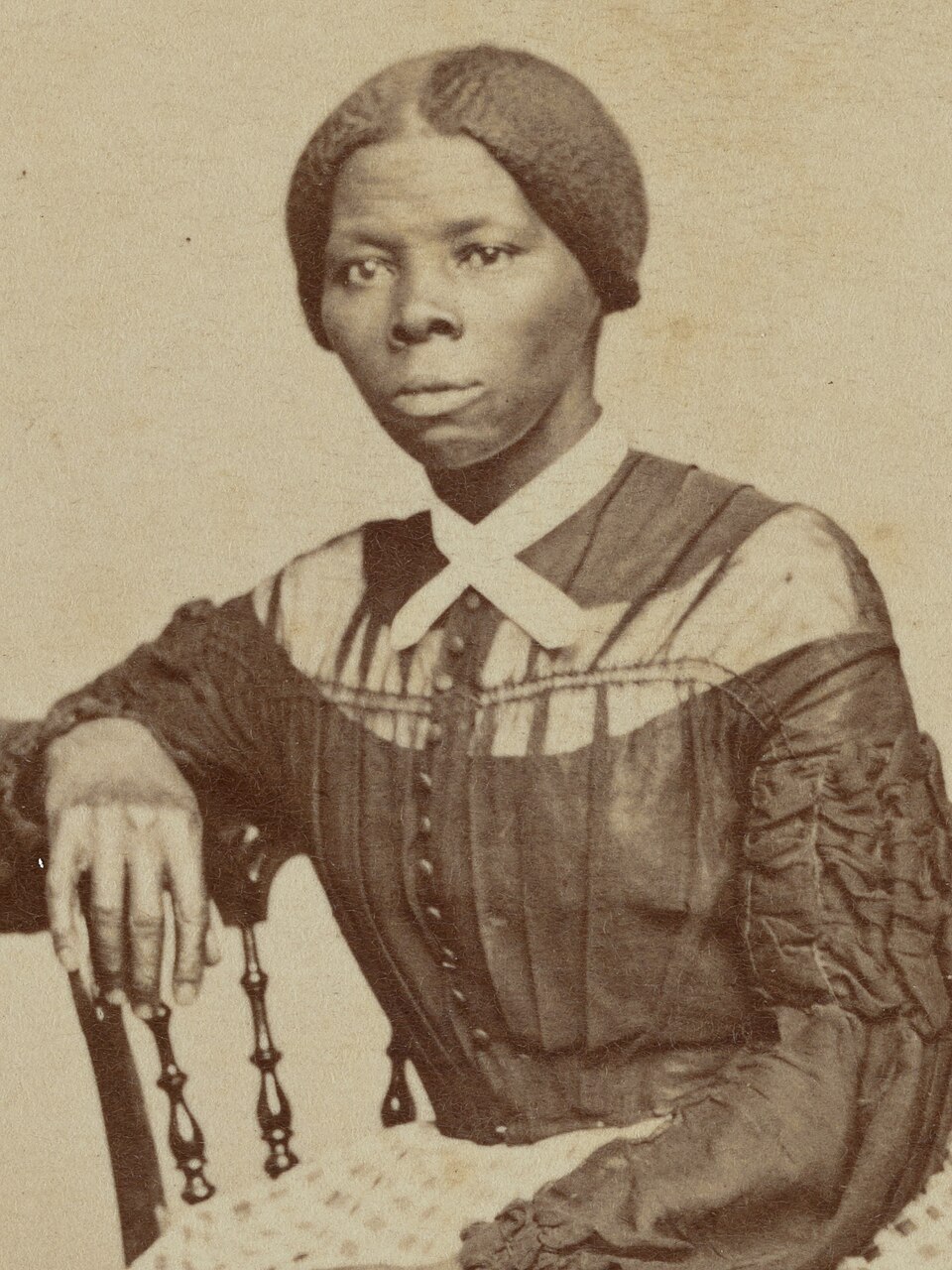
Harriet Tubman
Le fait surprenant
During the American Civil War she led an armed military raid up a river in South Carolina that freed more than 700 enslaved people in a single night.
Harriet Tubman was born Araminta Ross, known as Minty, on a plantation on the eastern shore of Maryland, at a date no record kept, around 1822. Two of her sisters were sold away to the Deep South in chains, an event the family never recovered from. As a girl she was hired out to neighbouring farms, beaten for small failures, and struck in the head by a two-pound iron weight thrown by an overseer. The injury left her with headaches and sudden sleeping spells for the rest of her life.
In 1849, hearing she might be sold, she ran. She walked by night, following the North Star, using the network of safe houses and free Black families known as the Underground Railroad, about a hundred miles to Philadelphia. She changed her name to Harriet, after her husband and her mother. She was free, and free was not enough. Within a year she was going back south in disguise to bring others out, a route she knew how to walk and slave-catchers did not.
She made the trip about thirteen times over a decade, guiding some seventy people out of Maryland, and never lost a single one. Rewards for her capture ran to thousands of dollars, and posters named her. She moved her groups at night, spread word of the routes through signals and, it is said, songs, and carried a pistol partly to keep anyone from turning back in fear. John Brown, who met her and planned with her, called her General Tubman.
When the Civil War came she went south with the Union army, cooking and nursing at first, then working as a scout and spy behind Confederate lines. In June 1863 she guided three gunboats up the Combahee River in South Carolina, past mines placed in the water by the Confederate forces, and freed more than seven hundred enslaved people in a night, many of whom joined the Union cause. She was probably the first woman to lead an armed assault in the war.
After the war she raised money for schools, took in strangers who needed a bed in her home in Auburn, New York, and campaigned for the vote for women alongside Susan B. Anthony, who had to introduce her at meetings because hardly anyone believed a story so large. She was denied a veterans’ pension for years before Congress granted her twenty dollars a month. She died in 1913, and is now the face on the American twenty-dollar bill.
Sources: National Park Service; Encyclopædia Britannica.
Le quiz
Harriet Tubman is famous for rescuing enslaved people by night, but in June 1863 she did something no woman had done in the war. What?
À demain. Trois nouveaux visages arrivent chaque matin.
Sans inscription, sans paiement. Les visages sont gratuits à lire. L’e-mail du matin arrive avec le produit complet.