Nursing and statistics · 1820–1910
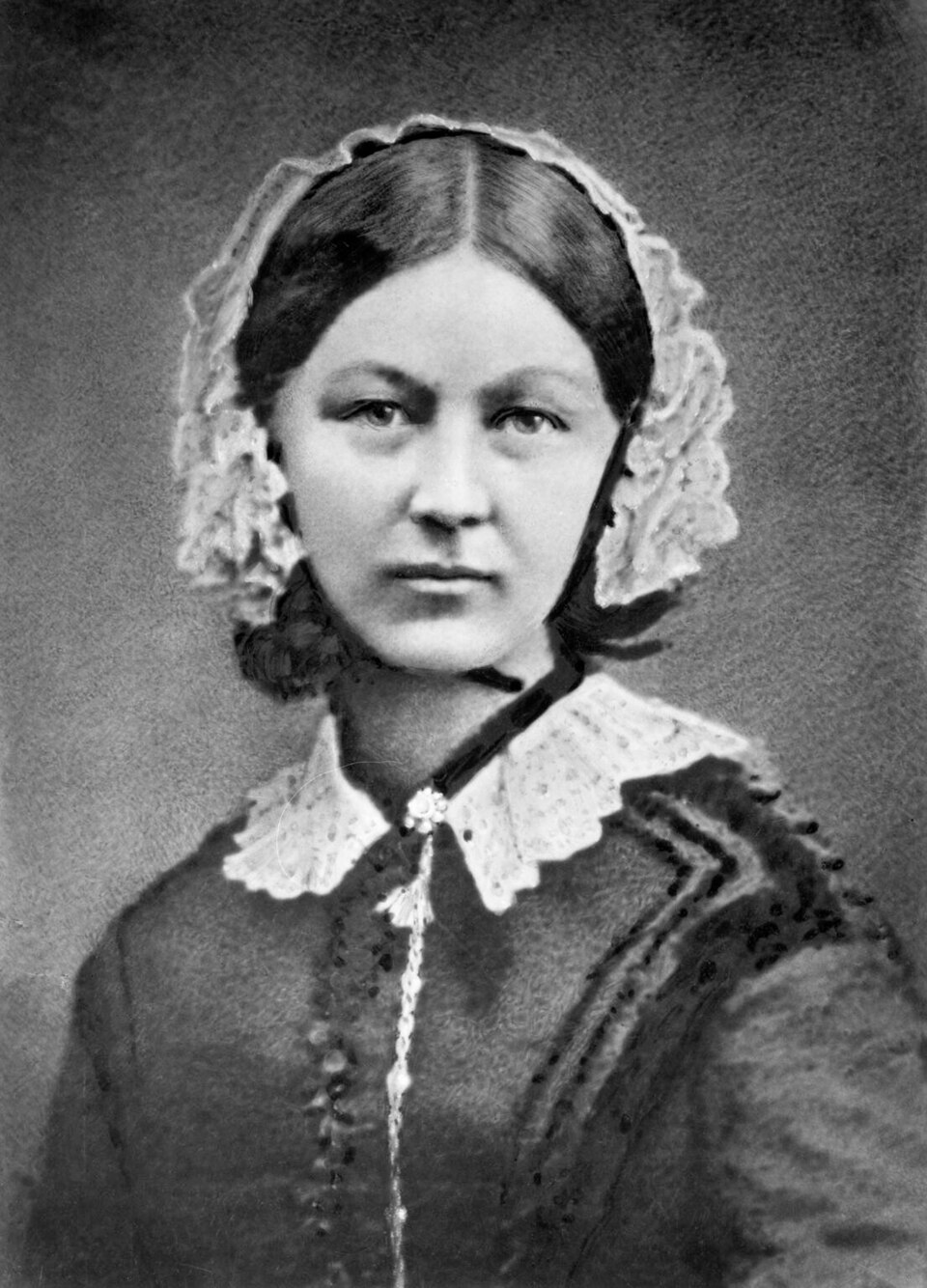
Florence Nightingale
Le fait surprenant
She was one of the first women ever elected to the Royal Statistical Society, in 1858, for proving with numbers that filthy hospitals were killing the wounded.
Florence Nightingale was born in 1820 in Florence, Italy, while her wealthy English parents were travelling, and named after the city. She grew up in great houses in Derbyshire and Hampshire, expected to marry well and keep a household. Nursing was servants’ work and hospital nurses had a reputation close to that of drunks and thieves. When she announced at seventeen that she felt called to it, her family was horrified, and her mother did not speak to her for a time.
She learned what she could in hospitals in Germany and France, and ran a women’s hospital in London. Then came the Crimean War. In 1854 the British public learned from newspaper reports that wounded soldiers at the military hospital at Scutari were lying on bare floors in their own filth, without blankets or clean dressings, dying faster of disease than of their wounds. Nightingale was sent with thirty-eight nurses and found a sewer running beneath the wards and mortality above forty per cent in places.
She cleaned, scrubbed, quartermastered and bullied the army supply system into working, and the death rate fell. The lamp she carried on her night rounds made her famous, though the longer work was quieter: after the war she fought to prove, with tables of numbers, that most of the deaths had been preventable. She invented a striking diagram, the polar-area rose, to show it, and in 1858 became one of the first women elected to the Royal Statistical Society.
She came home from the Crimea ill, probably with an infection she never shook off, and spent much of the next fifty years in bed, which did not slow her down. From that bed she ran a reform of army medical care by letter, wrote Notes on Nursing, and in 1860 founded a training school for nurses at St Thomas’ Hospital in London, the first of its kind.
She died in 1910, aged ninety, by then an institution in herself, though she had refused a national funeral and a burial in Westminster Abbey, asking to lie with her parents in a Hampshire churchyard. International Nurses Day is held on the twelfth of May, her birthday, and every trained nurse in the world now works inside the profession she built out of a job nobody respectable wanted.
Sources: Encyclopædia Britannica; Royal Statistical Society.
Le quiz
Florence Nightingale is remembered as a nurse, but in 1858 she was elected to a famous society for a different kind of work. Which one?
À demain. Trois nouveaux visages arrivent chaque matin.
Sans inscription, sans paiement. Les visages sont gratuits à lire. L’e-mail du matin arrive avec le produit complet.